


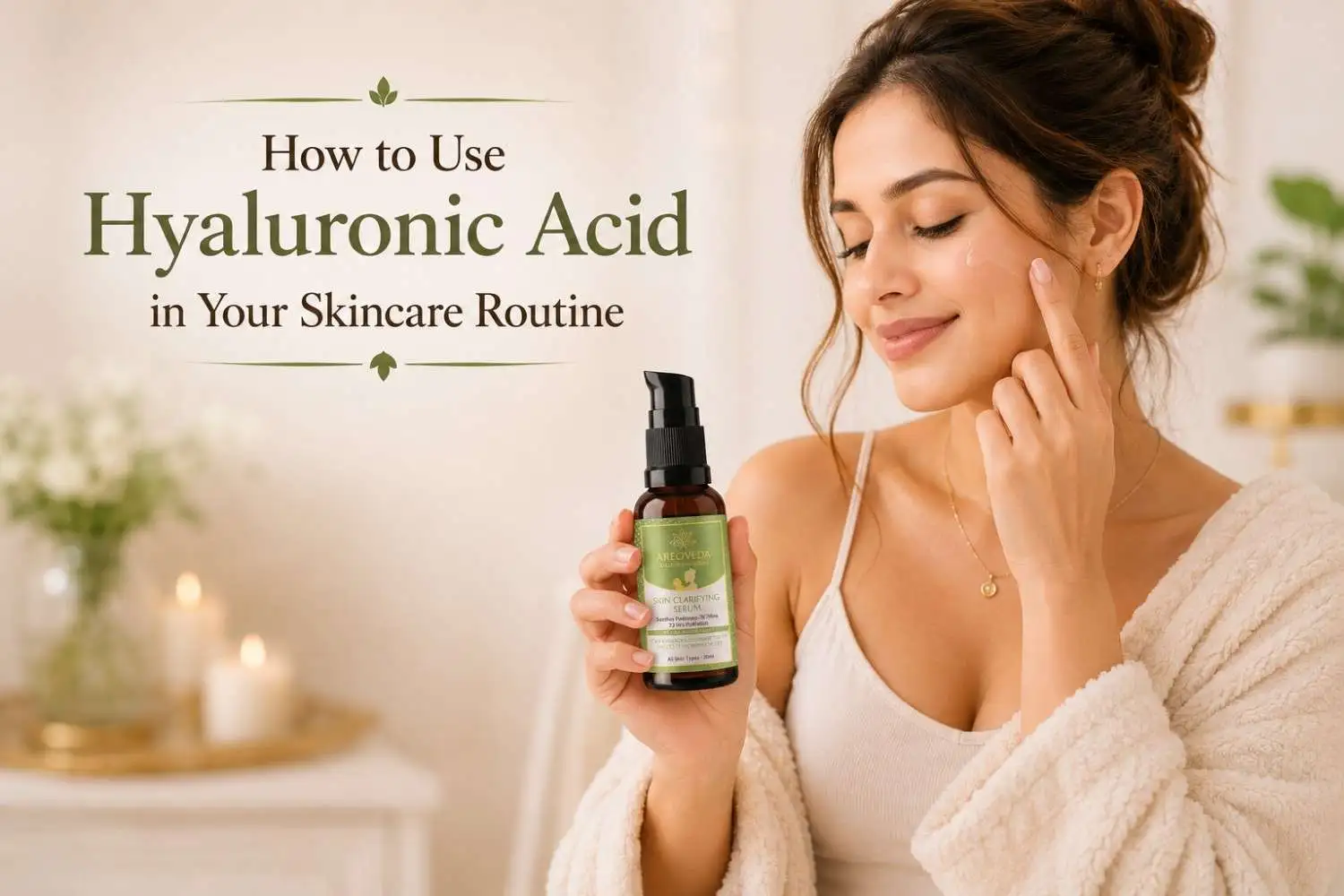
If you are someone who's keen on learning all about skincare, you might have come across Hyaluronic Acid. It is a key molecule in skin ageing and moisture that has a unique capacity to bind and retain water molecules.
Hyaluronic Acid is also a naturally occurring substance in the body that helps to maintain skin plumpness and hydration.
In the past few years, Hyaluronic Acid has become quite a popular skincare ingredient present in almost all skincare products, offering intense hydration and anti-ageing benefits.
In this blog, we will discuss how and why you should include Hyaluronic Acid in your skincare routine, every single day. 1
Key Takeaways
|
What is Hyaluronic Acid?
Hyaluronic Acid is an active ingredient that is mostly found in skincare products like moisturisers, serums, cleansers, toners and more. Hyaluronic Acid not only moisturises the skin but also minimises signs of fine lines, ageing and wrinkles.
Technically speaking, Hyaluronic Acid is a naturally occurring group of sugar molecules that provide lubrication to the body's connective tissues, like joints. It is a group of molecules called polysaccharides that work to cushion the body's connective tissues. It is also topically used as a powerful humectant, attracting moisture to the surface of the skin for plump and deeply hydrated skin. 2
Benefits of Hyaluronic Acid 3
Over time, our body's store of Hyaluronic Acid declines. And environmental factors like smoking or air pollution further accelerate the process. The good news is that topical products like serums, creams, toners, and more can help rebuild the depleted stores, bind the water molecules and increase the water content of the skin.
The main benefits of Hyaluronic Acid include:
- Being a humectant, it attracts and binds moisture, prevents water loss and keeps skin soft, hydrated and glowing
- Reduces fine lines and wrinkles, making them less visible 4
- Improves the overall texture of the skin 3
- Topical Hyaluronic Acid can speed up the healing process of wounds and inflammation 5
- It can also relieve dry eyes 6
- Regular use can boost skin firmness and help maintain a youthful glow 7
How to Use Hyaluronic Acid Correctly
When it comes to using Hyaluronic Acid as a part of the skincare routine, you must ensure the following:
- Hyaluronic Acid works best on damp skin. For best results, apply hyaluronic Serum on slightly damp skin and follow with a moisturizer to seal the moisture.
- It is safe for all skin types and works very well in combinations with active ingredients like Vitamin C, Canadian Willowherb, Retinol and turmeric root extract, etc.4 8
- Hyaluronic Acid should always be used twice daily as a part of your skincare routine for maximum efficacy.
Side Effects of Hyaluronic Acid 9
Generally, Hyaluronic Acid is considered safe and well-tolerated by all skin types, and side effects are rare but can cause irritation for some people. In case you are using Hyaluronic Acid as a topical serum or cream, you must be careful of the following side effects.
- Irritation, such as redness, itching, or rashes, can occur if the formula contains additives or is applied to sensitive skin
- If Hyaluronic Acid is used in low-humidity environments, it can sometimes cause dryness as it draws moisture from deeper skin layers
- People may also experience pain, swelling, and bruising if the reaction is severe. Although it usually clears out in about a week
Are all hyaluronic acid products created equal?
No. All Hyaluronic Acid products are not created equal. They are different from each other based on their molecular weight, concentration and formulation. The major difference depends on the following factors.
- Molecular Weight: A high molecular weight is used for surface hydration, while a low molecular weight will be used for deeper penetration, which provides long-lasting results.10
- Formulation: Skincare formulas that combine different molecular sizes tend to be superior as they provide immediate hydration and deeper, long-term benefits.
- Ingredients: The concentration and ingredients used, along with Hyaluronic Acid, also impact how the product performs on your skin.
- Penetration Ability: Hyaluronic Acid that penetrates deeply usually uses molecules that are micronised or of lower weight. 11
What ingredients should you look for in a product?
While Hyaluronic Acid is the main ingredient, several ingredients are infused into the formulation to give maximum results. When you start looking for a good Hyaluronic Acid product, you can keep the following in mind:
Disclaimer: Hyaluronic Acid may also be listed as Sodium Hyaluronate in some places. This is a version that tends to be of a smaller molecular size, which makes it an effective addition.
Vitamin C:
Look for a Hyaluronic Acid skincare product that also features Vitamin C. It is an antioxidant that can help fix the dryness and protect your skin against environmental damage. These two ingredients work really well and penetrate more deeply, delivering the benefits of Hyaluronic acid effectively. A few skincare ingredients that are rich in Vitamin C include: 12
Vitamin B5:
This is usually used to soften and smooth skin while providing deep hydration. It works really well with Hyaluronic Acid, preventing skin dehydration. 4
Best AreoVeda Products with Hyaluronic Acid
Most Hyaluronic Acid skincare products are suitable for all skin types. It is always safer and more effective to pick up skincare products formulated for specific skin types.
For Oily and acne-prone skin, we recommend you pick AreoVeda Skin Clarifying Serum, which is formulated with Sodium Hyaluronate (HA), Canadian Willowherb, and PENTAVITIN® to reduce breakouts, soothe irritation and give you clearer skin with consistent use. They use Sodium Hyaluronate, which makes the formulation effective, visibly reducing redness in just 30 minutes of use.
For dry skin, you can try using The Ordinary Hyaluronic Acid 2% + B5, which consists of Hyaluronic Acid in medium and high molecular weights for intense hydration.
Overall, AreoVeda Skin Clarifying Serum can be used for all skin types. Owing to the formulation that is mindfully created for all skin types, it can reduce any active breakouts, clarify acne scars, boost skin hydration and smooth skin to revive your natural glow.
How do you add it to your routine?
While adding Hyaluronic Acid depends on the type of product you are using, the best way to add it is through moisturisers and serums.
Serums:
To add a Hyaluronic Serum to your skincare routine, you can cleanse and pat your face dry, leaving it a little damp. Take a couple of drops of the serum on your face using the palm of your hands and pat until absorbed. Never forget to moisturise immediately after applying the serum to seal the hydration.
Moisturiser:
If you are using a moisturiser with Hyaluronic Acid, use it after cleaning, exfoliation or applying a serum.
When can you expect results?
Results can vary! All skincare products are formulated differently, and each of them shows results with consistent use. As a Hyaluronic Serum, results may start with temporary effects, and give you a plumper, more hydrated skin within a few weeks. Nevertheless, if you are looking to reduce the appearance of fine lines, acne scars, breakouts or signs of ageing, you may have to wait for more than 28 days to see a visible difference.
Conclusion
To keep the youthful glow on your skin, you need to hydrate it. Hyaluronic Acid is one of the most effective ways to do that. It is easy to find, use and have the lowest chances of side effects. It's safe for all skin types and is even recommended by dermatologists to be used daily for clearer, radiant and glowing skin!