

Summer heat brings sweat, humidity, and constant temperature changes—but ironically, skin often becomes drier. Prolonged sun exposure, air conditioning, frequent bathing, and dehydration strip the skin’s natural lipids, weakening the barrier and causing roughness, irritation, and tightness.
This is where emollients play a crucial role.
They don’t just moisturise—they repair, protect, and restore your skin’s moisture barrier.
This guide explains what emollients are, how they work, which type suits your skin (including pregnancy-safe options), and how to use them for maximum benefit.
Post Contents
[hide]
What Are Emollients?
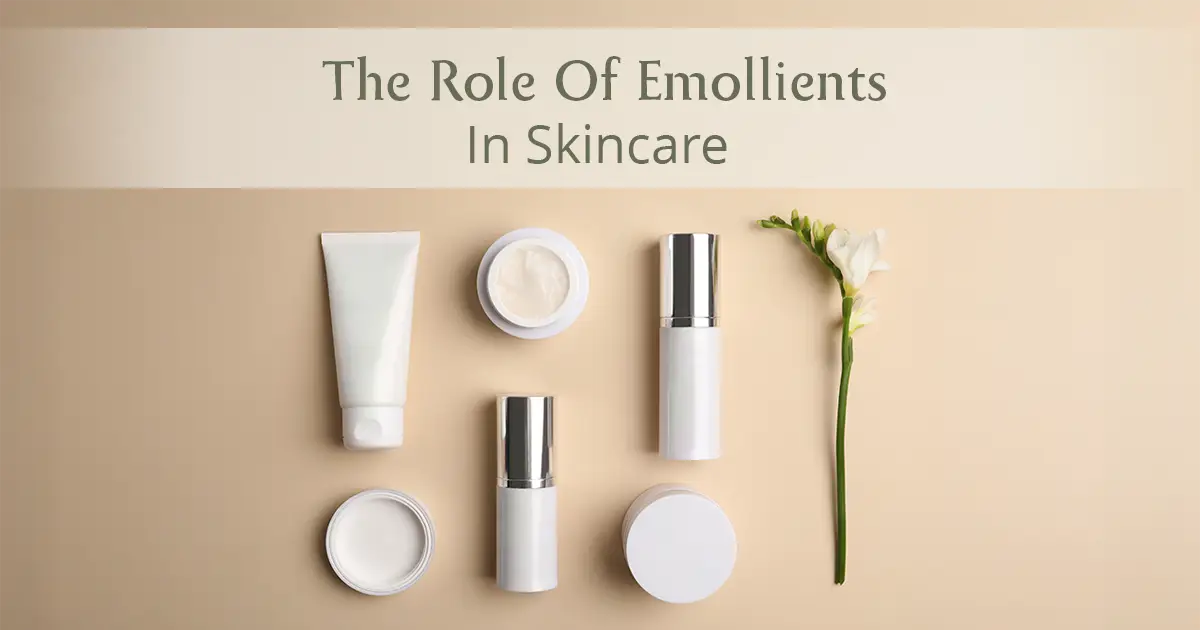
Emollients are moisture-restoring ingredients that fill the gaps between skin cells, making the skin soft, smooth, and flexible. They form a thin protective film on the surface that reduces transepidermal water loss (TEWL).
You’ll find them in:
-
creams
-
lotions
-
ointments
-
gels
-
spray moisturisers
-
baby skincare products
-
pregnancy-safe skincare
Common emollient ingredients: shea butter, squalane, ceramides, jojoba oil, cetearyl alcohol, dimethicone.2
How Do Emollients Work?
Emollients primarily smooth the skin and strengthen the moisture barrier, working differently from:
-
Humectants (e.g., glycerin, hyaluronic acid) – pull water into the skin
-
Occlusives (e.g., petrolatum, beeswax) – form a thick barrier to prevent water loss
Emollients sit between these categories, offering a balance of hydration, softness, and barrier repair—ideal for dry, sensitive, and pregnancy-prone skin.3
Why Your Skin Needs Emollients
Daily exposure to:
☀️ UV radiation
🌬️ Pollution
❄️ AC airflow
🚿 Excessive washing
🧼 Harsh cleansers
…weakens the skin barrier and leads to dryness, redness, irritation, and flakiness.
Emollients help manage:
-
Dry skin
-
Sensitivity
-
Barrier impairment
-
Post-sun dryness
-
Skin conditions like dermatitis and psoriasis
During pregnancy, hormonal changes can worsen:
-
Dryness
-
Itching
-
Stretching of skin
-
Redness and sensitivity
Daily use of gentle, pregnancy-safe emollients provides relief.4 5 6
Types of Emollients & How to Choose the Right One
Not all emollients work the same way. You should choose the right emollient based on your skin type, seasonal changes, and even pregnancy-related skin needs. Here's a brief guide to set you off on the right path:
1. Lotion Emollients
Lotions are lightweight and fast-absorbing due to their higher water content compared to oil. Hence this makes them suitable for everyday moisturising without a greasy feel.8 If you're pregnant, it is advisable to opt for fragrance-free lotions to minimise the risk of skin irritation.9
2. Spray Emollients
If you want a no-fuss way to moisturise, spray-on lotions are a fast and easy solution. They absorb instantly without needing to be rubbed in, making them perfect for quick hydration anytime, anywhere. Also, if you're an expectant mum, go for a gentle, fragrance-free spray lotion to soothe itchy and stretched skin.1
3. Cream Emollients
Creams are lightweight and moisturising, and thus are suitable for daytime use. They absorb more quickly than ointments and do not leave a greasy finish.1 Also, applying it is very easy as they don’t feel heavy on the skin.
Tip: Shea butter or oat-based creams help calm sensitive, pregnancy-prone skin.
4. Ointment Emollients
Thick, rich, long-lasting barrier support.
Best for: very dry, cracked, or thickened skin.
Use at night for: deep repair.
Avoid on: weeping eczema (can worsen infection).1
Who Should Use Emollients?
Emollients benefit everyone, but are essential if you have:
✔ Eczema / Atopic Dermatitis
Relieves itching, scaling, and inflammation.
✔ Psoriasis
Softens plaques and improves flakiness.
✔ Contact Dermatitis
Restores the barrier and reduces sensitivity.
✔ Pregnant Women
Helps manage dryness, stretch marks, and itchy skin.
✔ Babies & Toddlers
Gentle on developing skin (choose hypoallergenic types).
Natural Emollients to Look For
If you prefer natural emollients, here are some that offer excellent hydration:11 12 13
- Shea butter – Deeply nourishing and gentle on eczema prone skin.
- Jojoba oil – Closely mimics the skin’s natural oils, making it easily absorbed.
- Squalane – A lightweight, non-greasy emollient derived from olives.
- Coconut oil – Provides moisture and forms a light protective barrier.
- Olive oil – Contains beneficial fatty acids that restore dry skin.
- Cetearyl alcohol – Fatty alcohol that also acts as an emollient, helping to smoothen and soften the skin while preventing moisture loss.
How to Use Emollients for Best Results
To get maximum skin barrier repair:
- Apply immediately after bathing (within 3 minutes).
- Use generous amounts—thin layers don’t work as well.
- Pat, don't rub, to prevent irritation.
- Reapply 2–3 times a day, especially in winter or during pregnancy.
- Use a richer emollient at night for deeper repair.
When to See a Doctor
If you apply emollients regularly but continue to experience recurring dryness, redness, or inflammation, then you most likely need to consult a dermatologist. Depending on your skin needs, a physician can prescribe more potent medications or skincare products.10
Pregnancy & Skincare: What to Avoid
Pregnant women should avoid ingredients that may affect hormones or be absorbed into the bloodstream:
🚫 Retinoids
🚫 Phthalates
🚫 Salicylic acid in high concentration
🚫 Hydroquinone
🚫 Certain essential oils
Always read labels or choose pregnancy-safe brands.
Pregnancy-Safe Emollients From AreoVeda
If you're looking for gentle, science-backed, pregnancy-safe skincare, AreoVeda offers strictly safe, toxin-free formulations.
- Stretch Marks Cream - Shows visible results in 28 days and works on both old & new marks.
- Natural Nipple Butter - Soothes sore and cracked skin
- Moisturising Spray Lotion - Provides 72 hours hydration and relief to acne-prone skin.
Not only this, all AreoVeda products are EWG Verified, Ecocert Certified, and cellularly proven on lab-grown human skin cells, making them completely safe for pregnant women!
Final Thoughts…
Emollients are simple, effective, and a must to keep your skin hydrated and soft. However, the key is to find one that will suit your skin needs. With regular application of emollients, you will likely be amazed at how rapidly your skin gets smoother and healthier.
Nonetheless, if you do have a skin condition, it’s best to see a dermatologist before introducing any new product to your skincare. And if you're pregnant, always consult your gynaecologist first before trying new skin products.
FAQs
Q1) Can I Use Emollients Alongside Prescription Creams?
Yes, emollients can be applied on top of prescription creams. It's generally best to apply the prescription treatment first, allow it to penetrate, and then use the emollient. This will keep the skin moist and enhance the effectiveness of the prescribed medicine. However, always confirm with a doctor before use.
Q2) How Is An Emollient Different From A Moisturiser?
An emollient is a moisturiser, but not every moisturiser is an emollient. Emollients make the skin smooth and soften it by filling the spaces between the skin cells, whereas moisturisers may also contain humectants (to attract water) and occlusives (to seal in moisture).
Q3) Are emollients safe during pregnancy?
Yes—as long as they are free from retinoids, phthalates, and harmful preservatives. Choose gentle, certified formulations.
Q4) Can emollients clog pores?
Heavy ointments may clog pores for acne-prone users. Choose lighter lotions or spray emollients if you have oily or acne-prone skin.
Q5) Can I use natural oils as emollients?
Yes—shea butter, jojoba oil, squalane, and coconut oil are excellent natural options.