

Ever noticed how skin troubles like breakouts & irritation show up after stressful days? Blame your brains!
Stress triggers the release of cortisol, the stress hormone. When produced excessively, it causes your body to produce more oil, leading to clogged pores & breakouts. Additionally, it degrades collagen fibres and makes your skin more sensitive & reactive.
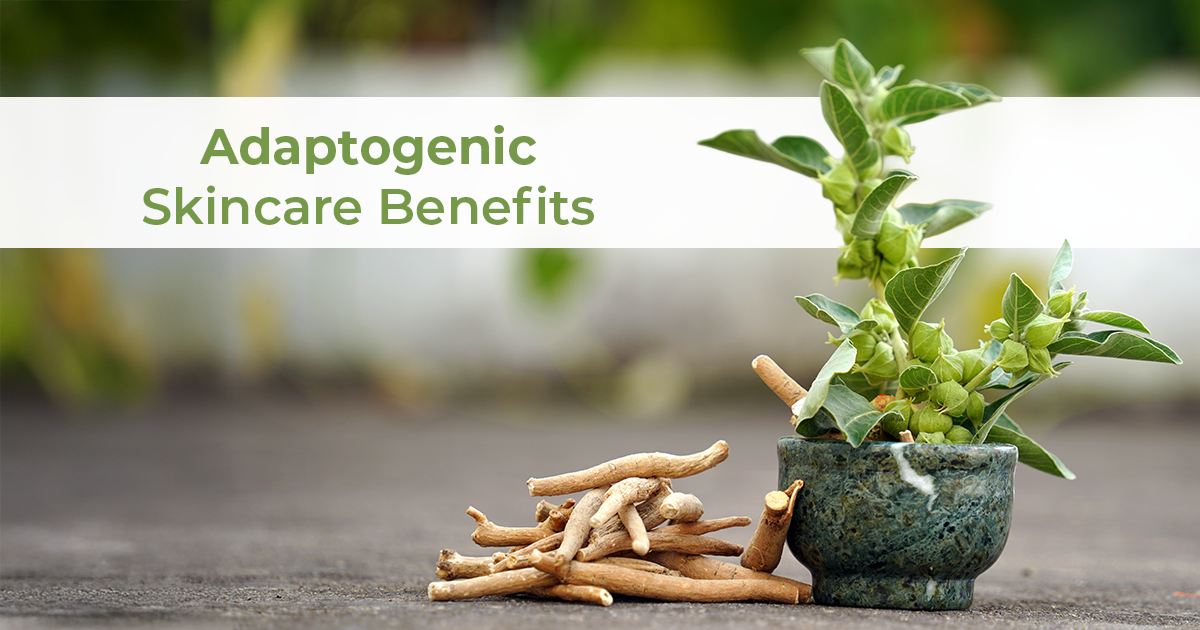
And that’s where adaptogens like ashwagandha can offer respite. Adaptogens are natural substances that can help calm your body and restore the lost balance. In short, they help your body adapt!1
In this blog, we’ll explain what adaptogens are and how they can help your skin find its glow back…even after stressful days. So keep reading!
Quick Summary: Adaptogenic Skincare & Ashwagandha
- Stress triggers cortisol, which can lead to excess oil, breakouts, sensitivity, dullness, and faster aging in the skin.
- Adaptogens like Ashwagandha, Ginseng, Reishi, and Rhodiola help the body handle stress and support internal balance, which may reflect on the skin.
- Ashwagandha stands out for its research-backed benefits: helping regulate cortisol, improving sleep quality, and supporting a calmer stress response.
- On the skin level, Ashwagandha may help with hydration, elasticity, and wrinkle formation by supporting barrier strength, fibroblast activity, and antioxidant protection.
- Adaptogens aren’t quick fixes; they work best with consistency, standardised extracts, and the right dosage (guided by a healthcare professional).
- Those pregnant, breastfeeding, or on medication (especially thyroid or anxiety meds) should consult a doctor first.
- The core idea isn’t “use herbs for perfect skin,” but reduce internal stress → reduce external reactivity → support healthier skin over time.
What Are Adaptogens
Adaptogens are plants and plant parts that help relieve stress. They also help your body find its lost internal balance by interacting with the hypothalamic-pituitary-adrenal (HPA) axis. HPA axis is the regulatory pathway for your body’s stress response.1
People consume these adaptogens in the form of supplements or herbal remedies. Here’s a list of a few commonly used adaptogens along with their benefits:
Adaptogen |
Benefits |
|
Ashwagandha (Withania somnifera) |
Reduces stress & anxiety; may lower cortisol; supports sleep1 |
|
Ginseng (Panax spp.) |
Supports energy, immune resilience, and may help mental performance. Protects skin from aging, wrinkling and relieves allergy symptoms2 |
|
Reishi (Ganoderma lucidum) |
Helps internal organs, improves the nervous system, increases vitality, calms soul4 |
|
Rhodiola (Rhodiola rosea) |
Helps combat physical, chemical and biological stress in the body5 |
|
Schisandra (Schisandra chinensis) |
Helps fight cellular damage, inflammation and may protect vital organs like the heart, liver and lungs6 |
|
Licorice Root (Glycyrrhiza glabra) |
Helps with mouth ulcers and sore throat. May improve bad breath. Relieves eczema symptoms and burn wounds7 |
|
Turmeric (Curcuma longa) |
Anti-inflammatory, anticancer, antidiabetic, antidiarrheal, antimicrobial, antiviral, and antioxidant |
|
Tulsi (Holy Basil) |
Beneficial for people with diabetes, high cholesterol, obesity and arthritis.9 |
Knowing Ashwagandha Better: The Star Adaptogen for Skin & Stress
Ayurvedic & Unani texts have widely lauded Ashwagandha for its widespread health benefits. There’s also enough scientific evidence that backs these claims. Research shows that it has the following benefits:10
1) Improves Sleep
Ashwagandha has been found to improve sleep duration and quality, especially in people who suffer from anxiety or stress. Multiple clinical trials have shown that consuming Ashwagandha extract improved sleep onset time, increased total sleep duration and eased sleep disturbance during the night.
Nevertheless, researchers emphasise that the extract is not a replacement for your regular sleeping pills. Instead, it regulates the body’s stress response, which in turn helps you relax and sleep better.
2) Relieves Stress & Anxiety
Multiple studies have shown that Ashwagandha helps to regulate the stress hormone cortisol. Prolonged levels of high cortisol in the body can show up in the form of anxiety, irritability, fatigue or poor focus. By regulating your HPA axis, it helps your mind feel more stable and calm. Again, it’s not a replacement for your anxiety pills but a supportive supplement.
Additionally, Ashwagandha also helps your skin in several ways:11
3) Improves Skin Hydration
According to studies, Ashwagandha indirectly supports skin hydration by reducing stress-induced inflammation and supporting the skin barrier. High stress levels, as mentioned earlier, increase cortisol in the body, which weakens the skin barrier. This leads to water loss & skin dryness. The adaptogenic compounds present in Ashwagandha help to keep cortisol levels in check, which in turn improves the skin’s natural moisture balance. Additionally, the antioxidants present in this powerful herb also protect the skin from oxidative stress (aka the culprit behind dull, stressed skin).
4) Boosts Skin Elasticity
Skin elasticity is largely dependent on collagen and elastin fibres. And both of these are gradually damaged through stress. Research indicates that the bioactive compounds present in Ashwagandha show strong antioxidant and anti-inflammatory properties, which help slow down the collagen breakdown. Some lab studies also show that Ashwagandha extracts boost fibroblast activity, which is essential for collagen production.
5) Improves Skin Wrinkles
Oxidative stress, inflammation and collagen degradation together lead to wrinkle formation. But the powerful withanolides present in Ashwagandha can neutralise the free radicals and fight inflammation. Overall, the dual action of stress reduction and antioxidant support plays a major role in delaying the entire process of wrinkle formation and skin aging.
The Stress–Skin Connection Explained
When we’re stressed, our brain signals the body to release cortisol. This stress hormone has receptors (the binding sites) on our skin. When they bind together, you may notice the following changes:12
- Inflammation increases in the skin
- Wound healing slows down
- Skin becomes vulnerable to infection
- Sebum production increases
Together, all of these changes lead to multiple skin and hair woes, including:
- Acne
- Hair loss & thinning
- Eczema (dry, itchy rashes)
- Psoriasis (scaly red patches)
- Rosacea (facial redness)
- Scalp rash
- Hives (itchy bumps)
Here’s How You Can Add Adaptogens To Everyday Life
There are several ways in which you can incorporate adaptogens into your lifestyle:1
- Add it to your food and drinks.
- Take them in the form of capsules.
- Use in the form of tinctures or liquid extracts.
Dosage & Safety Considerations While Taking Adaptogens
Adaptogens work best when the right ones are taken in the right dose consistently. You must note that most clinical research on adaptogens like Ashwagandha, Rhodiola, and Panax Ginseng clusters around standardised extracts, not random kitchen-shelf powders. So when deciding dosage, it is important to pick a recognised formulation and then consult with your healthcare professional about your personalised requirements.1
Moreover, it’s all the more important to consult with your doctor before taking adaptogens if you’re1
- pregnant,
- breastfeeding,
- on medications (like SSRIs/benzodiazepines)
- diagnosed with autoimmune conditions or thyroid disorders
Summing Up
Adaptogenic skincare isn’t about chasing instant results. Instead, it’s about supporting the skin the same way that adaptogens support the body, i.e. by managing stress from the inside out. Because better stress management means calmer, healthier skin.
FAQs
Q1) Is Ashwagandha Good For Acne Or Oily Skin?
Ashwagandha may indirectly support acne-prone or oily skin by helping regulate stress and cortisol levels, which are known to worsen breakouts in some individuals.
Q2) Can Adaptogens Really Reduce Wrinkles?
Adaptogens like Ashwagandha, Ginseng, and Reishi are studied for their ability to reduce oxidative stress, calm inflammation, and balance stress hormones linked to premature aging. This may result in smoother texture, better skin elasticity, and fewer wrinkles over time—especially when paired with a good skincare routine and healthy diet.