


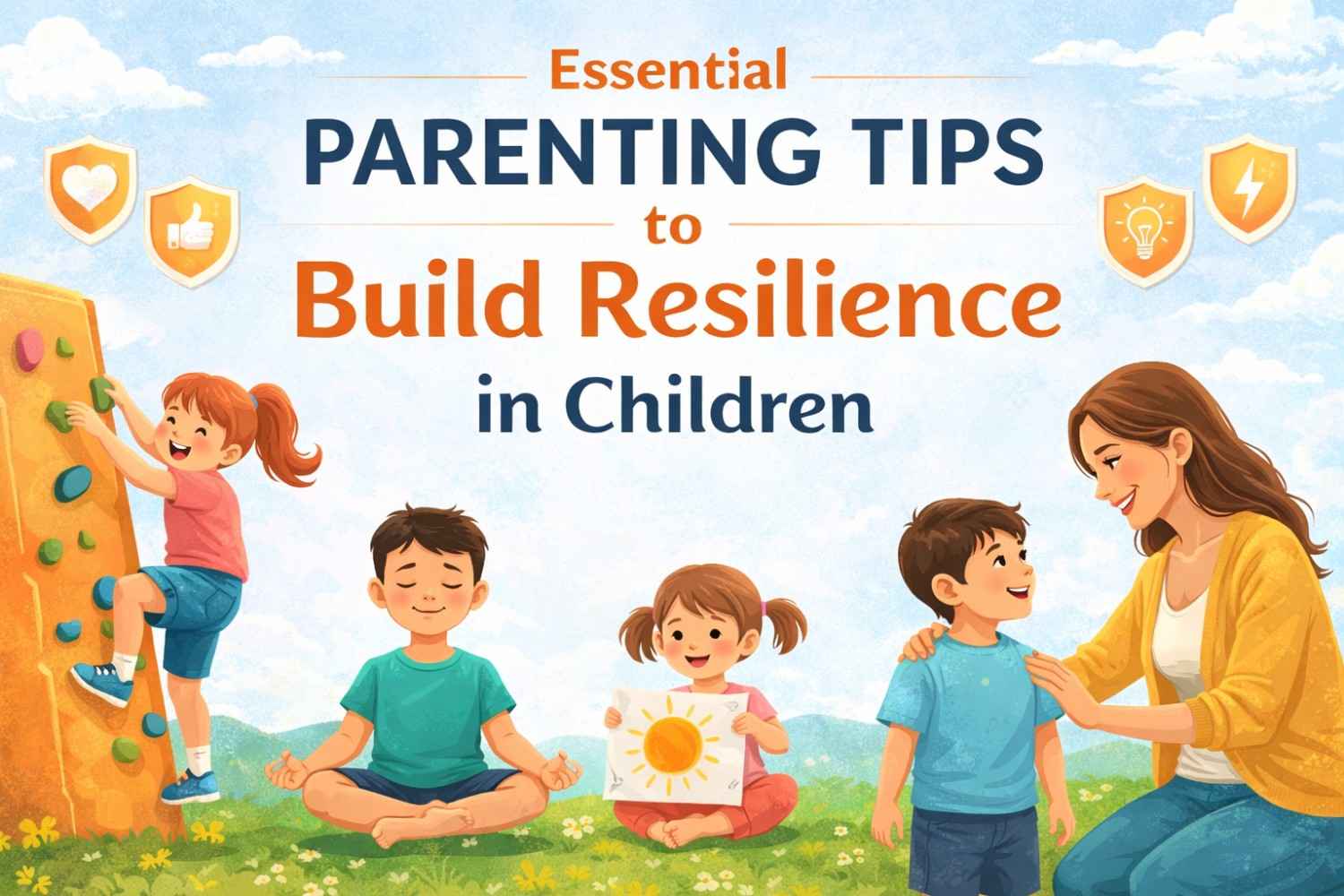
Being a parent is one of the most important obligations we take on, especially in today's fast-paced world. Raising children may be overwhelming, with hectic schedules, work responsibilities, school routines, and screen time. Many parents privately question, "Am I preparing my child well enough for real life?"
Children today face challenges much earlier in life: school pressure, friendships, competition, and emotional ups and downs they may not always understand. As parents, we want to protect them from disappointment, failure, or any kind of stress. This is where resilience in children matters: instead of preventing every struggle, we help them learn how to cope. In this blog, we’ll discuss the top 10 tips to raise resilient kids. Let's read on
Key Takeaways
|
What Is Resilience In Children?
A child's resilience is how well they can bounce back from failures and deal with tough situations without getting overwhelmed. It also means getting used to things they cannot change and continuing to grow and do well even when they become difficult. Strong children don't just get through challenging times; they often learn important lessons from them.
The toughness of a child changes over time. At different stages of growth, it can go up or down, and a child may be better at handling some situations than others.
Children become more resilient over time when they:
- Have close, helpful relationships with their parents, siblings, teachers, and people in their neighborhood.
- Have mental and useful skills that help them handle stress and problems.
- Exhibit positive thought patterns, adopt positive attitudes, and employ healthy problem-solving techniques.1
8 Essential Parenting Tips for Raising Resilient Children
1. Do not fulfill every need immediately
It's natural to want to soothe your child right away, but repeatedly addressing minor discomforts prevents them from gaining independence. Allow them time to try to handle issues on their own before stepping in.2
2. Allow for safe and age-appropriate risks
Children gain confidence when they are allowed to do new things. Allow children to try age-appropriate activities such as climbing, cycling, meeting new people, or joining a group. Small risks instill judgment and courage.2
3. Teach problem-solving instead of providing solutions
When your child meets a challenge, avoid the impulse to supply immediate solutions. Instead, ask, "What do you think you can do?" Helping them think through choices improves their decision-making abilities.2
4. Prepare kids for discomfort, not just comfort
Life will not always run smoothly. Rather than eradicating all challenges, teach your youngster how to deal with uncertainty, disappointment, and change. These experiences are what help build resilience in children.2
5. Encourage Constructive Thinking
Instead of asking, "Why did you do that?" try, "How can you fix it?" This turns the focus from blame to responsibility and encourages youngsters to solve problems.
6. Allow Children to Make Mistakes
Mistakes provide valuable learning opportunities. When children see the natural repercussions of their behavior, they learn judgment and accountability.2
7. Teach Emotional Regulation
Help kids realize that being angry, sad, or disappointed is natural. Guide them through the process of cooling down, talking, or trying again after they have experienced an emotion.2
8. Avoid overreacting and using fear-based language
Speaking in a panicked or exaggerated tone might cause anxiety in youngsters. Calm answers make them feel more confident and capable of handling issues.2
Why Resilience Is More Important Than Intelligence Today
Resilient children can cope with setbacks and return to their normal routine more quickly. Every time they overcome a task, their confidence develops, and they begin to feel more capable of handling future challenges.
When things don't go as planned and children feel frightened, unhappy, disappointed, terrified, or upset, resilience helps them understand that these feelings are only temporary. They learn that unpleasant emotions pass and that they will feel better with time and assistance.
As a result, resilient youngsters are less prone to avoiding difficulties or responding in negative ways, such as becoming too defensive or frustrated. Instead, they are more open to confronting obstacles and devising creative solutions.1
Essential Skills Children Need to Become Resilient
Your child can gradually learn emotional and practical skills that help them cope with challenges in a healthy way. These abilities form the foundation of resilience and prepare children to handle difficulties with more confidence.
Below are some important resilience-building skills and simple ways you can support your child in developing them:
Understanding and managing emotions
For instance, your child may feel worried if a family member is unwell. You might respond by saying, “I can see you’re really worried about Grandpa. It’s okay to feel worried. We’re all doing our best to help him get better.” This reassures your child while teaching them that emotions are normal and manageable.
Persistence
Encourage your child to try again when something doesn’t work the first time. Focus on effort rather than outcome. You could say, “I’m proud of you for finishing the race,” or “Well done for giving it another try.” Children learn that mistakes and setbacks are part of learning, not failure.1
Problem-solving
If a classmate says or does something unkind, speak with your child about possible responses and what they could do differently next time. Guiding them to think through solutions helps more than solving every small problem on their behalf.1
Seeking support
Teach your child that asking for help is a strength, not a weakness. Encourage them to approach a trusted adult, teacher, or parent when they feel stuck, upset, or confused.1
Final thoughts:
Resilience in children is not about keeping them away from experiencing difficulties. Rather, it is about teaching them how to deal with it. Every time a youngster overcomes disappointment, manages intense emotions, or tries again after failing, they gradually grow confidence in themselves. They realize that such issues are only transitory and that they can be solved.
As parents, our job is not to repair every problem but to guide and assist. Listening to their concerns, allowing for age-appropriate independence, and emphasizing effort over outcomes teaches youngsters patience and courage. These minor experiences eventually prepare children for larger obstacles in school, relationships, and adulthood.