

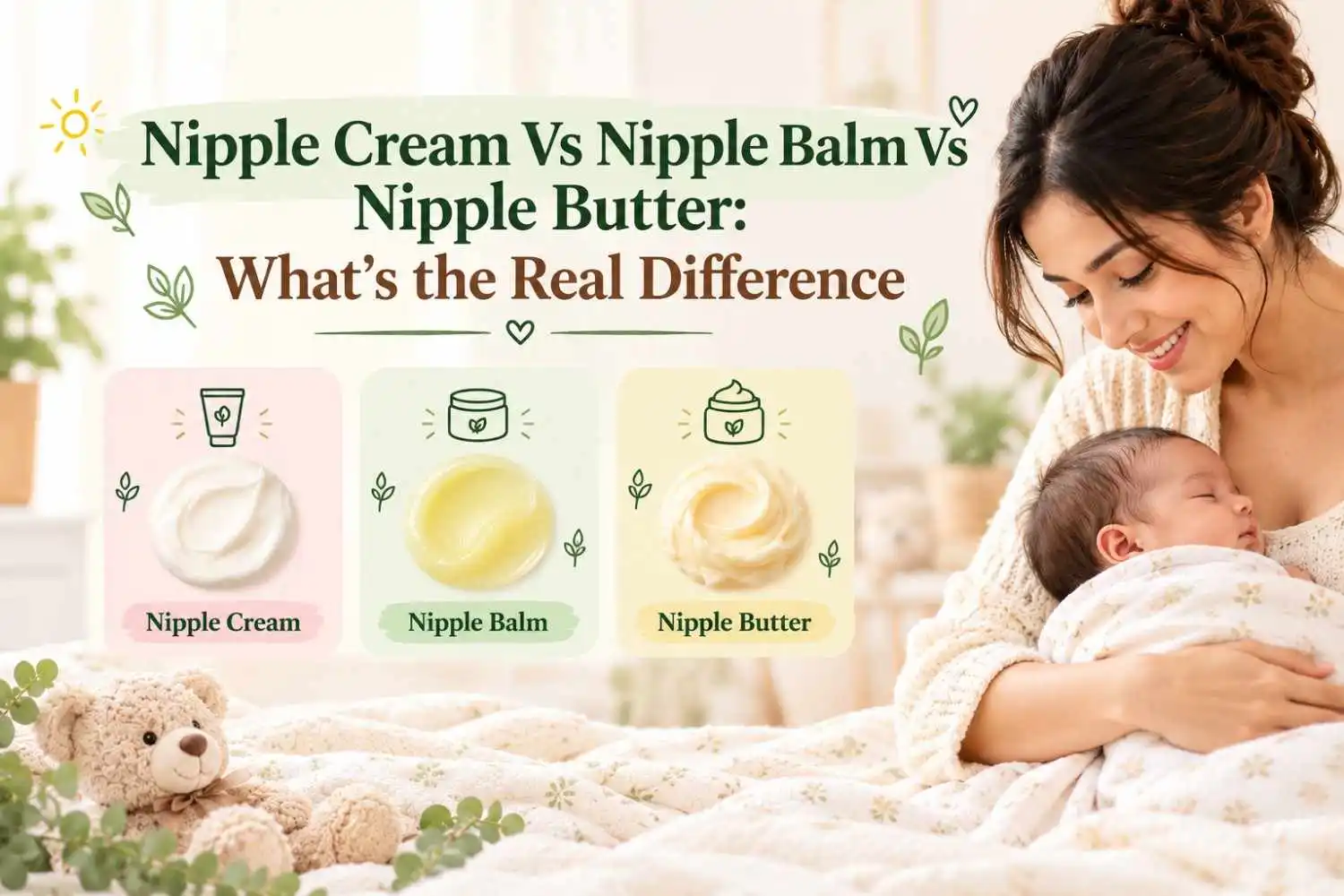
New mothers often experience sore, dry, or cracked nipples, particularly in the first week after giving birth. This can make every feed uncomfortable. Many mothers use a nipple cream, nipple balm, or nipple butter to find relief. But what is the difference between nipple cream and balm, and where does nipple butter fit in? In this blog, we explain how each one works and help you pick the right one for breastfeeding.
Key Takeaways
|
What Is Nipple Cream?
A nipple cream is a blend of water and oils. The water makes the cream light and easy to absorb, while the oil softens the skin without leaving a greasy layer behind. This is why many mothers choose a nipple cream for breastfeeding during the day.
When to Use Nipple Cream?
A nipple cream can be used easily when your nipples are dry, or when they feel tight and tender, and the skin is still intact. Moreover, a nipple cream is a good option during the day, as it absorbs quickly and is less likely to stain your bra.
What Is Nipple Balm?
A nipple balm contains no water and is made of oils and waxes like beeswax. Nipple balm is much thicker, absorbs slowly, and stays on the surface, forming a barrier against moisture loss and friction.
What Is Nipple Butter?
Nipple butter is similar to a balm, but it is made from plant butters like shea or mango butter that melt on the skin, making it rich but less sticky. A nipple butter usually feels softer and more spreadable than a balm, so it suits mothers who want extra nourishment without a waxy layer.
Why Do Breastfeeding Mothers Need Nipple Care?
Frequent feeds, a strong suck, and constant wet and dry cycles are all new for your nipples, so soreness in the first few days is common.¹ Most mothers find the pain usually eases as the feeding gets established.
What Is Nipple Balm for Breastfeeding Mothers?
A nipple balm for breastfeeding is the heavier option, suited for nighttime use. Since your baby will touch whatever is left on the nipple, its ingredients should be safe if a little is swallowed.
What Is Nipple Cream for Lactating Mothers?
A nipple cream for breastfeeding is meant to be applied after a feed and absorbed before the next one. Baby-safe ones typically don't require washing off, but a light wiping with a damp cloth won't hurt.
Nipple Cream vs Nipple Balm vs Nipple Butter: Key Differences
|
|
Nipple Cream |
Nipple Balm |
Nipple Butter |
|
Base |
Water plus oils (emulsion) |
Oils and waxes, no water |
Plant butters like shea or mango, often with oils |
|
Texture |
Light, smooth |
Thick, waxy |
Rich, melts on the skin |
|
Absorption |
Fast Slow, sits on top |
Medium |
Best for Mild dryness, daytime use Cracked skin, friction, overnight Dry, tender skin that needs extra nourishment |
Nipple Cream vs Nipple Butter
A nipple cream is water-based, so it absorbs fast and feels light, while a nipple butter is richer and takes longer to sink in. Choose a cream for everyday softness and a butter when your skin needs more nourishment.
Nipple Balm vs Nipple Butter
Both are rich and protective, but a nipple balm is made of oils and waxes and stays on top of the skin, whereas a nipple butter is made of plant butters and melts in. A balm gives more of a barrier, while a butter feels softer and less sticky.
Which One Should You Choose?
Nipple cream is the best option if your skin is just dry. However, if your skin is cracked or rubbing against the cloth, causing friction, then nipple balm is a much better choice. A nipple cream for cracked nipples can also work when the cracks are mild, as long as it is soft and fragrance-free. And if you are looking for a product which provides you richness but not the waxy texture, then a nipple butter is the one to choose.
Ingredients to Look For
Below are the ingredients you should look for in any of the nipple care products you tend to buy:
-
Plant butters: Shea and mango seed butter to soften and nourish your dry skin, so a shea butter nipple cream is worth a look
-
Plant oils: Almond or any other plant oil that you are not allergic to will help keep your skin moisturised.
-
Humectants: Choose a product with glycerin and hyaluronic acid, which attract water to the skin.
Ingredients You May Want to Avoid
Below is the list of ingredients you should avoid to protect your skin and baby:
-
Fragrance and essential oils: They may irritate cracked skin, and your baby will also taste them.
-
Alcohol: One of the ingredients to avoid, as it will dry out your already sore skin.
-
Anything you are allergic to: Lanolin is derived from sheep's wool, almond oil comes from nuts, and ghee is a dairy product, so if you are allergic to any of them, check the label. If you want to avoid lanolin, look for a lanolin-free nipple butter or cream.
Tips for Healthy Nipples During Breastfeeding
-
Get the latch checked early. If your baby is well-attached, the nipple will lie against the soft palate at the back of the mouth, rather than being pinched.¹
-
Expressed breast milk, which can be applied as a few drops after breastfeeding and allowed to dry, is a simple, free alternative. ¹
-
Thrush may be present with pain and white patches, shiny skin, or a deep burning sensation; mastitis may be present with a red, hot, painful area on the breast with fever. Both need a doctor.³ ⁴
Why AreoVeda Natural Nipple Butter
A good nipple product is soft enough to be used at every feeding and is made with ingredients you wouldn't second guess for you and your baby. The AreoVeda natural nipple butter is one option for breastfeeding mothers. It contains no lanolin and is a blend of mango seed butter, shea butter, ghee, sweet almond oil, hyaluronic acid, turmeric root extract, and dipotassium glycyrrhizate.
It is water-based and feels light like a cream but with the richness of butter. The brand says it is EWG-verified and has over 98% natural ingredients, with a price tag of ₹284 per 25 g.⁵ Almond oil and ghee are present in it, so it may not suit people with nut or dairy allergies.
How to Choose the Right Product Type
-
Check the label for breastfeeding safety: Look for a clear statement on whether it needs to be wiped off before feeds.
-
Match the texture to the time of day: Use a cream or light butter during the day and a balm at night.
-
Patch test first: Try a little on your inner arm before using it on sore nipples.
Conclusion
A nipple cream, nipple balm and nipple butter all keep your skin moisturised and protected while it heals. The real difference is texture: creams are light, balms are protective, and butters are rich. And remember, if feeding still hurts at every feed after the first week, the answer is usually in the latch, not in the tube, so do ask for help.
Frequently Ask Questions:
1. Can I use nipple cream and balm together?
Yes. Many mothers use a light cream during the day and a thicker balm at night.
2. What is the difference between nipple cream and balm?
A nipple cream contains water and oils, so it absorbs quickly. A nipple balm contains only oils and waxes, so it stays on the skin and forms a protective barrier.
3. What is the difference between nipple balm and nipple butter?
A nipple balm is made of oils and waxes, so it sits on the skin and works as a barrier. A nipple butter is made of plant butters such as shea or mango, so it melts into the skin and feels softer and less sticky.
4. Which is better for cracked nipples: nipple cream or nipple balm?
A balm usually feels better on cracked skin because it stays on the surface and reduces friction. However, cracked nipples are often a sign of a poor latch, so get your feeding position checked too. You can read more in the NHS guide to sore nipples.
5. Do sore nipples always mean a bad latch?
Not always. Some tenderness in the first few days is normal. But pain at every feed is most often caused by poor attachment, although thrush or an infection can also be behind it. You can learn more from the NHS guide to sore nipples and the NHS guide to breastfeeding and thrush.
6. Is nipple balm better than nipple cream for pumping?
A balm can help reduce friction from the pump flange, but apply only a thin layer so it does not make the flange slip.
7. Can I use nipple cream every day?
Yes, a nipple cream for breastfeeding is usually meant for use after every feed. Stop if you notice redness or itching, and speak to your doctor.