





You might not know, but your baby’s skin is much thinner than you think. So it reacts more quickly to heat, wetness and rubbing as well.
As a new parent, you might be very concerned when you change the diaper and see the rash there. You might see a red patch or a tiny bump in the fold of the neck and maybe rough, dry skin on the cheeks. All this is new to you and can make you think if this is serious?
The hardest part is that you can't differentiate between many body rashes, as they all look the same at first. Heat rash, diaper rash, eczema and all other allergies makes the baby’s skin red. But each one comes with its own symptoms, where it appears, and how it feels, and obviously how it started.
Accurate baby rash identification involves checking where the rash appears, what it looks like, whether it causes itching and whether your baby has other symptoms.
If that is exactly what you are trying to work out, then you are in the right place. In this blog, we have covered what a baby rash is, its causes and types, home remedies, prevention and when you should see a doctor. So keep reading!
```html
Key Takeaways
|
What Is a Baby Rash?
A baby rash is a noticeable change in the skin colour and texture of your baby’s skin. This rash can be a redness, a tiny bump, a dry scaly patch or a raised skin.
When a baby's skin is developed and is still learning to hold on to moisture, that is when it gets the most irritated. The baby's skin can get irritated by heat, wetness and rubbing. These are the very common reasons for rashes in early years, and parents should not panic.
Baby Rash Causes
Heat and sweat
Indian summers are unpleasant for babies. If you wrap your baby too tightly, he will be too hot and will develop heat rashes in the folds.2
Wetness and rubbing
If the diaper is left on too long after it is wet or dirty, the skin begins to rub against the edge of the diaper, which is the most common cause of diaper rash.3
Dry, sensitive skin
Some babies are simply born with skin that loses water easily, making the skin dry. This is much more common in families who run a history of eczema, asthma or hay fever.4
Triggers and infections
Many times, a new food, a new soap, a new fragrance, a new detergent and even a new fabric can trigger the allergy in the newborn. Furthermore, many times a viral infection such as a cold or fever can also accompany skin rashes.¹
Baby Rash Types
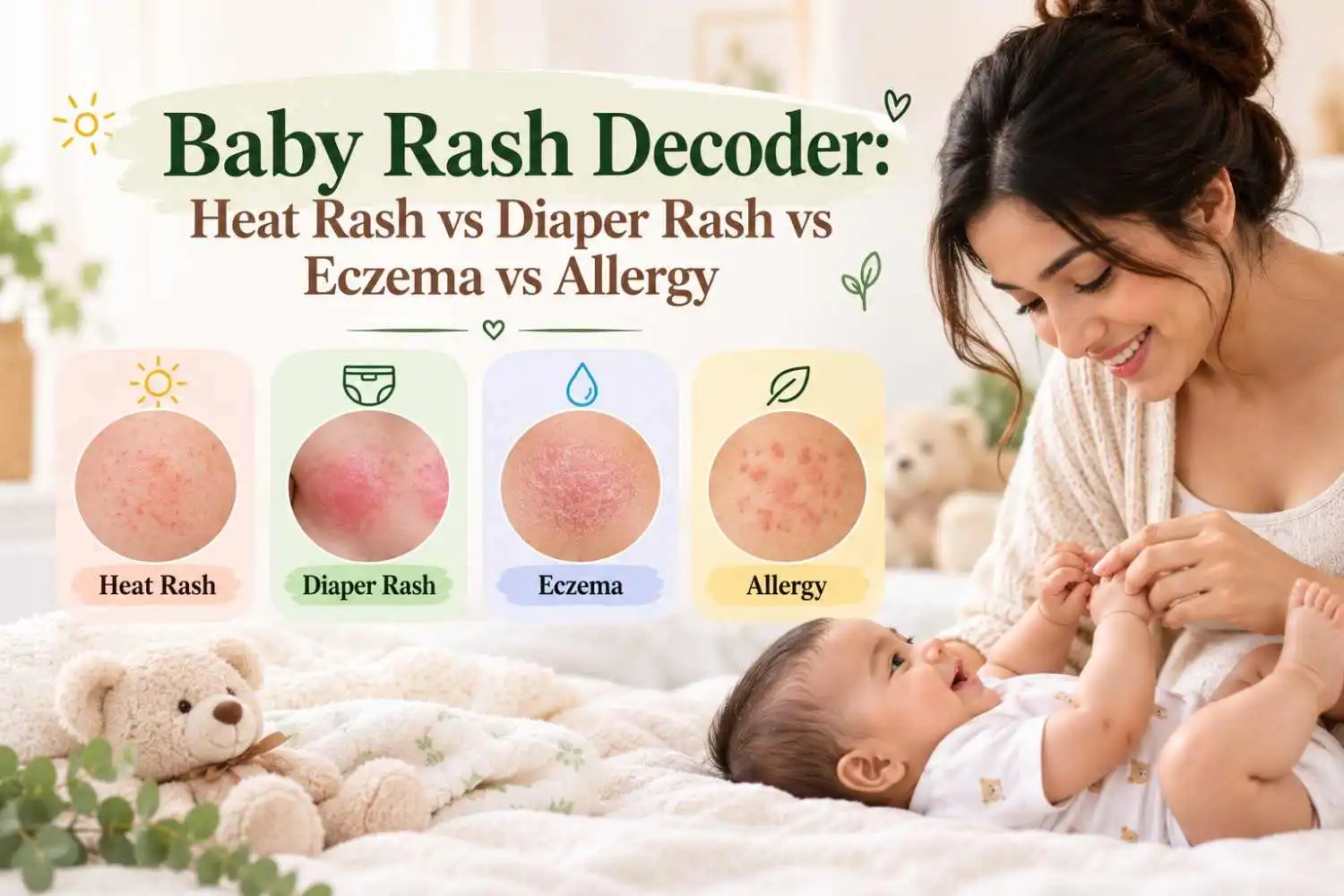
Here is a quick decoder that you can use when you spot something on your baby's skin.
|
Rash |
Where it shows up |
What it looks like |
Common trigger |
|
Heat rash |
Neck, chest, back, armpits, skin folds |
Tiny red or skin-coloured bumps, some filled with fluid, feel prickly. |
Hot weather, too many layers |
|
Diaper rash |
Bottom, genitals, inner thighs |
Red, shiny, sore skin under the diaper |
Wet or dirty diaper left on for long |
|
Eczema |
Face (mostly cheeks), elbows, knees |
Dry, rough, scaly patches that itch |
Dry skin, family history, irritants |
|
Allergy (hives) |
Anywhere, often around the mouth or where the trigger touched |
Raised pink or red welts that can move around |
New food, soap, fabric, medicine |
For easier baby rash identification, look at the affected area and the appearance of the spots, but remember that some skin conditions can look similar and may need a doctor's assessment.
1. Heat rash
You can identify heat rash easily, as it looks like a cluster of small raised spots. These spots are around 2mm to 4mm across and may be filled with fluid. These heat rashes feel itchy and can make the baby fussy and cranky. However, it gets better on its own in a few days.2
The main difference in heat rash vs diaper rash is the affected area: heat rash often develops in sweaty skin folds, while diaper rash usually affects skin covered by the diaper.
2. Diaper rash
A diaper rash sits at the edges of the place where you put the diaper. There the skin might look red and feel warm when your baby has it. Moreover, while changing the diaper, your baby might cry due to discomfort. But don't worry, and check if the rash looks bright red and shiny with little red spots or if it spreads around the little folds. If you notice this, then it may be a yeast infection and not just a diaper rash. 3
When comparing heat rash vs diaper rash, also consider the trigger: trapped sweat often causes heat rash, whereas prolonged contact with urine, stool and moisture commonly contributes to diaper rash.
3. Eczema
Eczema is also one of the rashes, but it behaves more differently than the ones listed above. It is drier and comes and goes in flare-ups. And in babies it often shows up on the cheeks, elbows and knees.4
If you are wondering, “is it eczema or a rash caused by irritation?”, look for persistent dry, itchy patches, but consult a paediatrician because several skin conditions can appear similar.
4. Allergy rash
Usually hives. Raised, itchy welts, all shapes and sizes, sometimes in one spot and sometimes all over. They generally fade in a few days. If you are unsure about baby rash identification, especially when the rash spreads quickly or appears with other symptoms, consult your paediatrician rather than relying on appearance alone.
Home Remedies for Baby Rash
Keep it cool and airy
For heat rash, take off the extra layers and dress your baby in loose cotton. A damp, cool cloth on the area can calm the prickly feeling.2
Give the diaper area a break
It is recommended to change nappies more often and let your baby spend some time without one every day for a few hours. A barrier cream that contains zinc oxide will help keep wetness away from the area.3 The AreoVeda Diaper Rash Cream is one of the best options, which has Zinc Oxide along with Oat and Sunflower Seed Oil.6
Moisturise dry patches
If your baby is dealing with eczema, then a short lukewarm bath should be followed by a fragrance-free moisturiser.4
Baby Rash Prevention
Keep the skin barrier strong
Wash with a mild soap-free wash, and refrain from using scented products; perfume is a very common irritant for babies.2
Introduce foods one at a time
If your baby is ready for solids, introduce one new food at a time, and wait a few days before introducing the next. This way you'll be able to identify why you have a rash if it develops.
When to See a Doctor?
Go to emergency right away if
-
The rash does not fade with glass pressure. This may be a symptom of meningitis. ¹
-
Your baby's lips or face are swollen, and/or breathing is difficult. ¹
Call your doctor if
-
Your baby is less than 3 months old and has a temperature of 38°C or higher. ¹
-
After 2-3 days of treatment, a diaper rash hasn't improved or has blisters, pus or crusty sores. 3
-
The rash is rapidly spreading; your baby looks unwell, very sleepy or not eating.
Conclusion
Most baby rashes look scarier than they are. After knowing where to look, heat rash, diaper rash, eczema and allergy rashes can be distinguished more easily, and most of them can be taken care of at home. But remember to always listen to your instincts and if it doesn't feel right, contact your paediatrician.
Frequently Ask Questions:
1. How to cure a baby's rashes?
Treatment depends on the type of rash. Heat rash often improves when your baby is kept cool, diaper rash may improve with frequent diaper changes and a zinc oxide barrier cream, and eczema usually requires regular moisturising. If the rash does not improve within a couple of days, worsens, or causes concern, consult your paediatrician.
2. Why do rashes occur on a baby's skin?
Baby skin is thin and sensitive and can react easily to heat, sweat, wetness, friction, fragrances, new foods, and infections. If you are wondering whether a rash is caused by eczema, heat, or an irritant, consider its appearance and location. Seek medical advice if you are unsure about the cause.
3. What are the different types of baby rashes?
Common types of baby rashes include heat rash, diaper rash, eczema, and allergic rashes such as hives. Other skin conditions include baby acne, milia, cradle cap, and rashes associated with viral infections. You can learn more from the NHS guide to rashes in babies and children.
4. When should I worry about a baby rash?
Seek urgent medical attention if a rash does not fade when pressed with a clear glass, particularly if your baby is unwell. A baby under 3 months with a temperature of 38°C or higher needs urgent medical assessment. Swelling of the face or lips, breathing difficulties, or a baby who appears seriously unwell also requires immediate medical attention.
5. What does a viral rash look like on a baby?
A viral rash may appear as small pink or red spots on the chest, back, tummy, or other parts of the body. It may occur alongside or after symptoms such as fever, a runny nose, or a cough. Many viral rashes resolve within a few days, but seek medical advice if your baby is unwell, the rash worsens, or you are concerned. You can read more in the NHS guide to rashes in babies and children.
6. Will a baby rash go away on its own?
Many mild rashes, such as heat rash and mild diaper rash, improve within a few days with appropriate care. Eczema is a recurring condition that usually requires regular skincare and moisturising. If the rash persists for more than a week, worsens, or is accompanied by concerning symptoms, consult your paediatrician. Seek urgent care for warning signs such as a non-fading rash or fever in a baby under 3 months.


