

Hey mom-to-be, pregnancy is a beautiful phase, but it often brings one common question before eating anything: “Can I eat this?” or “Is it safe for my baby?” These thoughts are completely normal. What you eat now is not just for you, it also supports your baby’s growth and development.
That is why it helps to have a clear understanding of which foods to avoid and what to limit during pregnancy. You are in the right place. In this blog, we will take you through the foods to avoid during pregnancy, with simple explanations to help you make informed and confident choices.
Key Takeaways
|
Why Are Some Foods Unsafe During Pregnancy?
If one is pregnant, one’s body is more susceptible to certain types of infections, thereby making one more vulnerable to infection by harmful bacteria than other people.
In order to prevent food poisoning, there are certain foods that should be chosen over others. For example, meat, eggs, unwashed fruits and vegetables, as well as unpasteurized milk, are often associated with foodborne infections. Such foods and drinks may raise the risk of pregnancy complications, including preterm birth or miscarriage.1
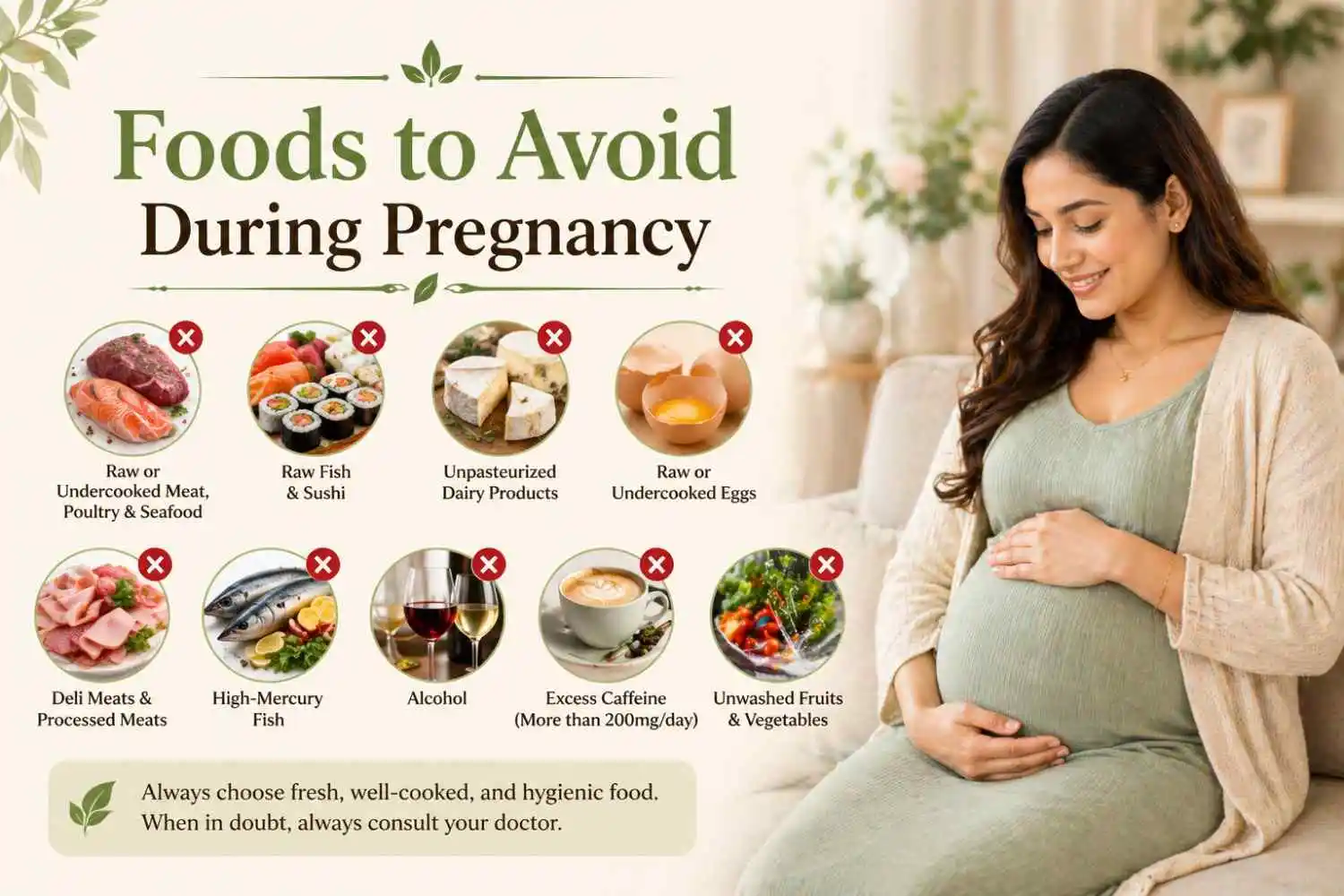
Top 9 Foods to Avoid During Pregnancy
Understanding what to avoid can help you feel more confident in your daily diet and reduce unnecessary risks. Here is a simple, easy-to-follow list of foods to avoid during pregnancy, along with why they matter.
1. Avoid High-Mercury Fish
During pregnancy, it is best to stay away from fish that contain high levels of mercury. Excess mercury exposure can affect your baby’s developing brain and may lead to developmental delays.2
According to the U.S. Food and Drug Administration, pregnant women should avoid the following fish due to their high mercury content:
- Bigeye tuna
- King mackerel
- Marlin
- Orange roughy
- Tilefish from the Gulf of Mexico
- Shark
- Swordfish
2. Avoid Raw or Undercooked Meat and Fish
Raw or undercooked meat, fish, and shellfish can carry harmful bacteria, viruses, and parasites that increase the risk of food poisoning. While these may not have caused issues before pregnancy, they can make you unwell now and may affect your baby’s health.2
During pregnancy, it is best to avoid:
- Sushi
- Sashimi
- Any raw fish or shellfish
- Rare, medium-rare, or medium-cooked meat such as steak and hamburgers
3. Avoid: Raw or Runny Eggs
Eggs are a great source of protein, but during pregnancy, how they are cooked matters just as much as how often you eat them. It is best to avoid raw or runny eggs because they may carry Salmonella, a bacteria that can cause food poisoning.
During pregnancy, your body is more vulnerable to infections, and Salmonella can lead to more severe illness. In rare cases, it may even cause complications such as serious infections that can affect your baby.2
It is important to avoid or double-check items like:
- Homemade Caesar dressing (store-bought versions are usually safe)
- Homemade mayonnaise
- Hollandaise and béarnaise sauces
- Uncooked cake batter and cookie dough
- Homemade royal icing or meringue
- Mousse
- Tiramisu
Even if a recipe does not clearly mention raw eggs, it is always a good idea to check labels or ask how the food has been prepared.
4. Avoid Processed Meats
Processed meats are best limited or avoided during pregnancy because they carry a higher risk of contamination with harmful bacteria like Listeria. This infection may not always cause noticeable symptoms in the mother, but it can have serious effects on the baby, including preterm birth or miscarriage.2
5. Avoid Soft Cheeses
Soft cheeses are more likely to be made from unpasteurised milk, which means they have not been heat-treated to remove harmful bacteria. Consuming these during pregnancy can increase the risk of infections like Listeria.2
6. Avoid Unpasteurised Juices
Fresh juices and ciders that are unpasteurised can also carry harmful bacteria. These are often found in local markets or labelled as “fresh” or “natural.”
To stay safe, choose only juices that clearly state they are pasteurised.2
7. Avoid Alcohol
Alcohol should be completely avoided during pregnancy. It can interfere with your baby’s development and may lead to long-term physical, behavioural, and learning challenges.
There is no safe amount of alcohol during pregnancy, so it is best to avoid all forms, including beer, wine, and spirits.2
8. Limit Salt Intake
While salt is a regular part of the diet, excessive intake during pregnancy can lead to water retention and increased blood pressure. This may raise the risk of complications such as preeclampsia.
Try to consume salty foods in moderation and focus on a balanced diet.2
9. Limit Caffeine
You do not need to completely eliminate caffeine, but it is important to keep it within safe limits. High caffeine intake may affect blood flow to the baby and impact growth.
It is generally recommended to limit caffeine to about 200 mg per day. This is roughly equivalent to one to two small cups of coffee.
Keep in mind that tea, including black and green varieties, also contains caffeine. Consume these in moderation and be mindful of portion sizes.2
Final Thoughts
Pregnancy is not about restricting everything you love, but about making safer and more mindful choices each day. As you have seen, certain foods can carry risks, but with a little awareness, it becomes easier to navigate what to eat and what to avoid.
Focus on balance, hygiene, and proper cooking methods rather than fear. Small, informed decisions can go a long way in supporting your baby’s healthy growth and your overall well-being.
If you ever feel unsure about a particular food, trust your instincts and seek guidance from your healthcare provider. After all, this journey is about nurturing both yourself and your baby in the safest, most confident way possible.
Frequently Ask Questions
1. Why do I need to avoid certain foods during pregnancy?
During pregnancy, your body is more vulnerable to foodborne infections. Certain foods may carry harmful bacteria or toxins that can increase the risk of complications such as food poisoning, preterm birth, or miscarriage.
2. Which foods are considered unsafe during pregnancy?
Common foods to avoid include high-mercury fish, raw or undercooked meat and seafood, raw eggs, unpasteurised dairy products, processed meats, and alcohol. These foods may pose risks to both you and your baby’s health.
3. Can I eat fish during pregnancy?
Yes, but not all fish are safe. Avoid fish high in mercury, such as shark and swordfish, as excess mercury can affect your baby’s brain development. Choose low-mercury fish in moderation instead.
4. Is it safe to eat eggs while pregnant?
Eggs are safe to eat only when fully cooked. Raw or runny eggs may contain Salmonella, which can cause illness during pregnancy. Ensure both the yolk and white are firm before consuming.
5. Why should processed meats be avoided?
Processed meats like deli meats and sausages may carry Listeria, a harmful bacteria during pregnancy. It is best to avoid them unless they are thoroughly heated before consumption.
6. Can I consume caffeine during pregnancy?
Yes, caffeine can be consumed in moderation. High intake may affect blood flow to the baby, so it is generally recommended to limit caffeine to around 200 mg per day.
7. Is alcohol safe in small amounts during pregnancy?
No, there is no safe level of alcohol during pregnancy. Even small amounts can affect your baby’s development and may lead to long-term health issues.
8. Are unpasteurised foods really that risky?
Yes, unpasteurised milk, juices, and soft cheeses can contain harmful bacteria like Listeria, which may lead to serious complications during pregnancy.