

Ever checked a product label and wondered what’s actually safe for your skin? The ingredient lists often look like chemistry equations, with most of them going beyond our comprehension! But the growing awareness of clean skincare in recent years has compelled more brands to explain their ingredient lists in simpler terms, and more customers have started learning what those complex names really mean. Moreover, clean skincare does not restrict itself to safer alternatives for the skin only — people are also consciously choosing products that are safe for the environment as well.
The growing awareness about product safety has skyrocketed the demand for non-toxic beauty. Today’s consumers aren’t swayed by marketing buzzwords like “organic” or “natural” — they want real proof that their skincare is genuinely safe. That’s where EWG-approved ingredients come in — a trusted benchmark that verifies a product’s safety and helps customers make confident, informed choices. 1
The Environmental Working Group (EWG) is an independent, non-profit organisation that researches cosmetic ingredients, maintains extensive safety databases, and runs product verification programs. 1,2, 3 EWG empowers consumers to make informed, conscious choices about the skincare and haircare products they use.
What Is the EWG and What Does It Do?
The Environmental Working Group (EWG) is an independent, non-profit organisation dedicated to protecting the environment and human health through education, research and advocacy. Established in 1993, this group works to uncover harmful ingredients, outdated safety laws and industrial practices that may put the planet and people at risk. 1
It works on the simple mission to empower people with science-backed, transparent information so that they can make safe and healthier choices every day. 1, 4
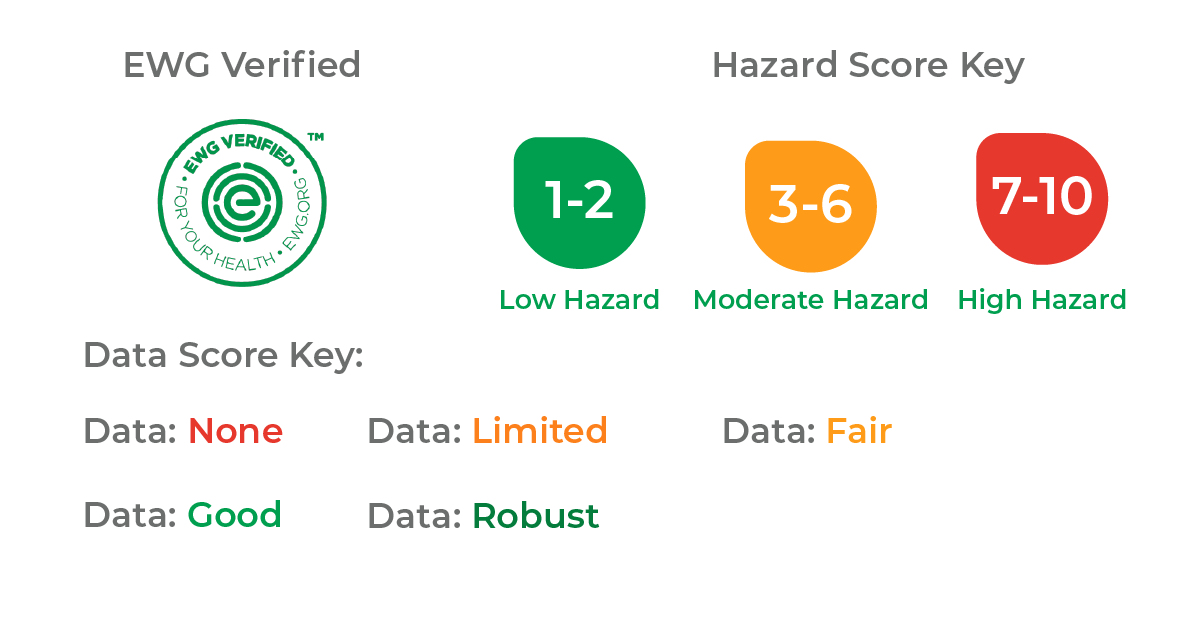
EWG’s team of policy experts, advocates and scientists rigorously evaluate consumer products.. They maintain trusted databases like the Skin Deep® cosmetics database and the EWG Verified™ Program, which help consumers identify clean and safe cosmetic ingredients and environmentally responsible products. Each ingredient or product is given a score from 1 (low hazard) to 10 (high hazard). 1, 5, 6
When you see an EWG VerifiedTM mark on a product, it means the product has passed the strictest standards of safety and transparency and that the formulation does not have any ingredient of concern. It also means that the product has no hidden toxins, no unsafe chemical blends and gives a clean picture of what is inside the formulation. 1,5
EWG also campaigns for stronger health and environmental regulations, encouraging industries to adopt safer standards. 7 They aim to provide the power to consumers to choose what’s right for their families and the planet. 1, 8
|
Label |
Meaning |
Example |
|
EWG Verified™ |
Meets strict safety & transparency standards |
Skincare, Babycare |
|
EWG Score 1-2 |
Low-hazard ingredients |
Aloe Vera, Jojoba Oil |
|
EWG Score 7-10 |
High concern ingredients |
Parabens, Formaldehyde |
This easy-to-understand system has made it simpler for consumers to shop smart and stay informed.
How Ingredients Get EWG Approval
The EWG certification process is not just a label, but a science-backed system that ensures only the safest ingredients earn approval. Each ingredient goes through multiple stages of testing and review to meet strict ingredient safety standards: 1, 9
1. Ingredient safety testing & transparency:
Each ingredient is checked against EWG’s Unacceptable and Restricted lists and must have full safety data available. The assessment is based on toxicology reports, published scientific literature, and global regulatory and safety databases. Only ingredients with clear, publicly supported safety profiles are allowed, no undisclosed chemicals, no data gaps, and no known health hazards.
2. Toxicity, contamination & regulation:
Every ingredient is tested for contamination, possible toxicity and compliance with international regulations. EWG’s cosmetic ingredient ratings range from 1 (low hazard) to 10 (high hazard), and only those scoring 1-2 are considered safe.
3. Manufacturing & labelling standards:
EWG also monitors how products are made. Brands must ensure contamination-free manufacturing and list every ingredient used in their formulations clearly, including the fragrance compounds.
4. Scientific collaboration:
EWG works closely with regulatory bodies and toxicologists to ensure its safety standards are regularly updated and accurate.
In short, earning EWG approval means passing through one of the most transparent and trusted review systems in the clean beauty world.
Top Categories of EWG-Approved Ingredients
Let’s talk about some common EWG-approved ingredients in skincare and why people trust them.
- Moisturisers & Emollients
Examples - Aloe Vera - (EWG score - 1)10, Shea Butter - (EWG score - 1)11
These ingredients go deep to hydrate your skin without clogging pores or causing irritation. Aloe vera hydrates dry skin and shea butter moisturises the skin and protects skin barrier. 12, 13 They’re proof that well-researched natural ingredients can deliver effective results without relying on harsh chemicals.
- Natural Oils & Extracts
Examples - Jojoba Oil (EWG score - 1) 14, Chamomile Extract (EWG score - 1-2)15
Jojoba oil has anti-aging, anti-inflammatory and wound-healing properties. 16 Chamomile extract also provides anti-inflammatory support, helping soothe and calm the skin.17
- Preservatives & Stabilizers
Examples: Sodium Benzoate (EWG Score - 1-2)18
Sodium Benzoate is one of the most common preservatives used in rinse-off products. 19 It has antifungal and antibacterial properties. 20
- Surfactants & Cleansers
Examples: Decyl-Glucoside (EWG Score - 2) 21
This plant-derived cleanser has skin and hair conditioning agents. 22
Common Ingredients Not EWG-Approved (and Why)
Not every ingredient found in skincare products is verified as safe by the EWG. Many commonly used chemicals in skincare products fail to meet the EWG’s strict ingredient safety standards due to their potential harm to humans/animals or the environment. 1
|
Category |
EWG-Approved |
Avoid These |
|
Preservatives |
Sodium Benzoate |
Parabens 23 |
|
Surfactants |
Decyl Glucoside |
SLS/SLES 24 |
|
Fragrance |
Natural Essential Oils |
Synthetic ‘Fragrance’ Blends 25 |
Why these Ingredients are Not EWG-Approved:
- Parabens – These are synthetic preservatives that may disrupt hormonal balance. As per studies, parabens can mimic estrogen in the body, thereby affecting reproductive health. 23
- Phthalates – Phthalates are often used to make fragrances last longer. These can lead to development and endocrine problems. Phthalates also cause environmental pollution. 26
- Synthetic fragrances – A commonly listed ingredient at the back of many skincare products is ‘fragrance’. But this term can hide dozens of undisclosed chemicals. Some of these chemicals can trigger headaches, allergies or skin sensitivity - especially in those with sensitive skin. 25
- SLS/SLES (Sodium Lauryl/Laureth Sulfate) – SLS/SLES are common cleansing agents that can strip the skin of its natural oils, leading to dryness, redness and irritation. 27
How to Check if a Product Is EWG-Approved
This step-by-step mini guide can help you check whether a product is EWG-approved or not:
- Visit EWG.org/skindeep
- Type in the product name or ingredient.
- Review its EWG score (1–10) — the lower, the safer.
- Look for the EWG Verified™ logo on the product’s packaging.
A product with the EWG VERIFIED™ seal meets EWG’s strict ingredient, transparency, and manufacturing standards. It indicates the product avoids EWG-flagged harmful ingredients and fully discloses its formulation.
Conclusion: Choosing Safer Skincare for a Healthier Future
Once you have understood how the EWG works and EWG-approved ingredients, you can make safer choices for your skincare products. By investing in products that are EWG-verified, you are also making informed choices for sustainable and environmentally friendly products.
If you are seeking a skincare product range that has all EWG-verified ingredients and is certified safe, you can try www.areoveda.in. Most AreoVeda products are toxin-free, certified safe and tested on lab-grown human skin cells for safety and efficacy. Checkout their range of skincare for pregnancy, babies and new moms.