

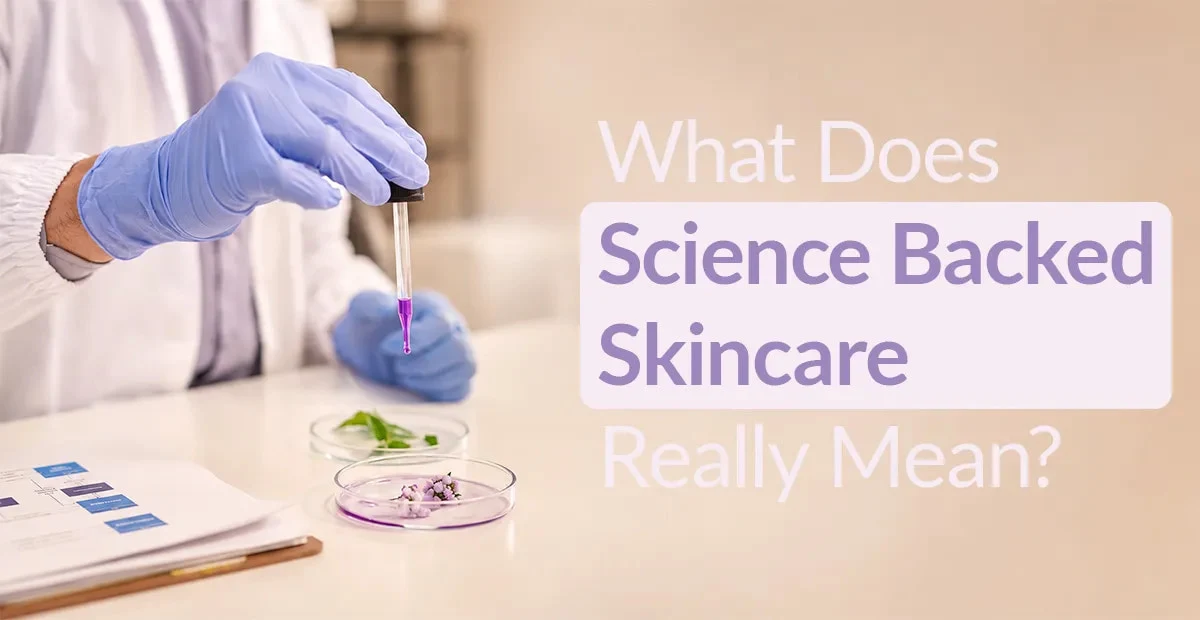
Science-based skincare doesn't tell you whether a product's ingredients come from a plant or a lab. It does tell you that researchers chose each ingredient, used it at the right concentration, formulated it at a pH that suits your skin, and tested it before it reached your skincare routine.
Today, most of the products available on the market say “dermatologist approved”, “clinically proven”, “100% chemical free”, or “pure and natural”. And sometimes all four of these phrases are printed on the same bottle. And this can be confusing for most people.
If you are a woman who is going through these labels during your pregnancy or a new mom who's concerned while trying to pick the best wash for her baby, then let us tell you that you do not need expertise to read through it. All you need to know is what these words are supposed to mean, how the product is made, what testing it goes through, and what the label reads. So in this blog, we will go through each one, step by step.
Key Takeaways
|
What is the Difference Between Natural and Science-Backed Skincare?
These two phrases are treated as opposites quite a lot. Natural sounds plant-based and closer to nature. However, science-backed sounds much more technical and lab-driven. You might think they are opposite because of the way they sound, but they are actually not. They are simply trying to tell you two different things about a skincare product you use daily.
What does "natural skincare" actually mean?
Natural skincare means the products you use in your routine are made primarily with ingredients which are sourced naturally from plants, minerals and more other natural essentials. However, these natural essentials might go through some processing before they are added to the formula to make a final product, but the idea is to retain as much of their natural origin as possible.
Moreover, it is worth knowing that there is no legal definition of the word “natural” for cosmetics.1 9 Neither the Indian cosmetics regulations nor the US one defines it. Moreover, the FDA and FTC have neither established a specific legal meaning for the word “natural” on cosmetic labels.
So now the big question is: how do you know if a product is genuinely natural or not? The answer lies in independent standards.
Let us understand this with an example: COSMOS is an international standard that sets rules for natural and organic cosmetics.2 COSMOS sets rules for which ingredients can be used, how they can be processed, and which ingredients or substances are restricted. ECOCERT, which is one of the certification bodies, checks whether brands meet the required standards set by COSMOS.
Let us take another reference: ISO 16128, which provides a method for calculating how much of a product’s formula is naturally derived or natural.3 However, it is important to remember that ISO 16128 is only a calculation guideline and not a certification. SO whenever a brand mentions an ISO 16128 percentage, it does not mean that the product has been independently tested or certified.
What does "science-backed skincare" actually mean?
Science-backed skincare is less about where an ingredient comes from and more about whether it actually works.
A science-backed product is developed using research and evidence. This means the ingredients are chosen for a reason, used in appropriate concentrations, and formulated at a pH that suits their purpose and the skin. The finished product should also undergo testing to check its safety, stability, and performance.
And here's something worth knowing: natural and science-backed aren't mutually exclusive. A plant extract can have strong scientific evidence supporting its benefits, just as a lab-made ingredient can be poorly researched.
Ultimately, the important question isn't whether an ingredient comes from nature or a laboratory. It's whether there is reliable evidence to support its use.
Is natural skincare always safe?
Not necessarily! Just because something comes from nature doesn't mean it will suit every skin type.
Think about essential oils. They are plant-derived and commonly used in skincare, but some can also trigger irritation or allergic reactions. A 2016 review by de Groot and Schmidt in Dermatitis found that nearly 80 essential oils had been associated with allergic contact dermatitis.4 Tea tree, orange, ylang-ylang, sandalwood and clove oils were among those with higher rates of positive patch-test reactions. Many reactions were linked to pure oils or high concentrations.
The amount used matters, too. Even a beneficial plant extract can irritate your skin if it is used at an unsuitable concentration.
There is another challenge with natural ingredients: they can vary from batch to batch. Factors such as the soil, climate, season, and harvesting methods can affect their composition. That's why responsible skincare brands test their raw materials regularly to maintain consistency and quality.
Does science-backed skincare mean harsh chemicals?
Not at all! In fact, this is where the idea of "chemical-free" skincare becomes misleading.
Everything is made of chemicals, including water, aloe vera, and coconut oil. So, technically, no skincare product can ever be chemical-free.
Modern skincare science is not about filling products with harsh ingredients. It's about finding safer, more effective and consistent ways to formulate them.
For instance, fermentation can help produce certain skincare ingredients with less waste and greater consistency than traditional harvesting methods. Similarly, nature-identical ingredients made in laboratories can offer the same useful properties as their natural counterparts while reducing the need to harvest scarce plant resources.
In other words, using science doesn't mean moving away from nature. Sometimes, it helps us use natural resources more responsibly.
What do common skincare claims on product labels actually mean?
With so many claims on skincare packaging, it can be difficult to know what they really tell you. Here's a quick breakdown:
|
Term on the pack
|
What it actually tells you |
What to look for instead |
|
Natural |
Ingredients are mainly sourced from natural materials, but the term has no universally accepted legal definition. |
A recognised certification, such as COSMOS Natural. |
|
Science-backed |
The brand claims its formulation is based on scientific evidence. |
Research supporting the ingredients and testing of the finished product. |
|
Chemical-free |
It doesn't have a meaningful scientific definition because everything is made of chemicals. |
A transparent, complete ingredient list. |
|
Toxin-free |
This is a broad marketing claim, not a defined cosmetic category. |
Specific information about ingredients the product excludes. |
|
Dermatologically tested |
The product has undergone some form of testing involving a dermatologist. |
Details about the test, its purpose and the number of participants. |
The key takeaway: Natural and science-backed skincare don't have to compete with each other. The best approach is to combine the two: ingredients inspired by nature, supported by research, tested for safety, and carefully formulated to work well with your skin.
How Is Skincare Formulated From Natural Ingredients?
Ever wondered why two Alovera gel products feel completely different when you use them on your skin, even when they both are the same ingredient and derived the same way? This is because the ingredient is not the only part of the story. How it is sourced, extracted, processed, and added to the formula plays a major role in the story.
Let us understand what goes into the formulation of natural skincare products.
Sourcing the right plant and the right part of it
You won't get a lot of skincare benefits by using all the parts of a plant. The leaves, roots, seeds, and flowers all contain very different compounds and compositions. Even the same plant, when grown in a different place, can have a very different composition.
And this is the reason why formulators need to be careful about where their ingredients are coming from. As for you getting the right product, formulators always check a lot of details, such as the plant origin, purity, and traceability. They also look for possible contaminations, which include heavy metals and pesticide residues, and make sure that the raw material is safe to use on the skin.
Extracting what the skin actually needs
After sourcing the right plant, the next step taken by the formulator is to extract the compounds that are needed for the formula.
The formulator might use a lot of different extraction methods to extract the formula, and each different method gives different results. For example, cold pressing, water extraction, glycerine extraction, and CO₂ extraction can each capture different compounds from a plant. The method of formulation depends on the properties which the formulator wants to retain.
Many a time, brands also use a technique known as cryomilling. This method involves grinding the plant materials at a very low temperature, which also helps protect the compounds that may break down when exposed to heat.
Standardising and stabilising every batch
Natural ingredients do vary from batch to batch. To maintain consistency, formulators might test each batch to ensure the important compounds remain within a specific range. This is called standardisation.
The formula also needs to stay stable over time. The plant extracts react with air, separating or supporting microbial growth, especially in water-based products. Antioxidants are suitable for packaging and are an effective preservative system that helps in preventing these problems, keeping the product safe until expiry.
Making sure the ingredient reaches where it works
The formula does not only need beneficial ingredients but also a way that allows it to do what it is meant to do. There are a lot of factors that influence how the ingredient interacts with your skin, such as the size of the ingredient, the balance of oil and water, and the product’s texture. Formulators consider these factors when developing the final product to make sure the ingredients work effectively and not simply sit on the skin’s surface.
Why Does pH Matter So Much in Skincare?
All of us, many a time or every time, do not pay attention to the pH mentioned on skincare products. But the pH really makes a real difference in how your skin will respond to that product.
Your skin is naturally slightly acidic and has an average surface pH of just below 5.5. This acidity helps in maintaining the skin barrier and also supports the good bacteria that naturally live on our skin. This protective layer is also known as the acid mantle. Products that are too alkaline, such as traditional soaps, can disturb the balance and leave your skin feeling tight, dry, and uncomfortable.
pH matters more than anything when it comes to babies. A newborn's skin is still adjusting to the life outside the womb, and its natural acidity takes time to develop over time. Research shows that this process continues during the first few weeks of life.6 Moreover, babies' skin holds less moisture during the first two weeks, which makes them vulnerable to dryness.
Why Are Kitchen Remedies Different From Formulated Products?
Turmeric, besan, malai, and lemon are familiar ingredients in many Indian households. We've all heard about their skincare benefits, and some of them do have properties that can be good for the skin. But using these ingredients straight from your kitchen is very different from using a skincare product made with them.
Here's why.
-
The pH isn't controlled: Lemon juice, for example, has a pH of around 2, which is much more acidic than your skin. Applying it directly can irritate. Lime juice can also react with sunlight and cause a painful skin reaction called phytophotodermatitis.7
-
You don't know how much you're using: A homemade turmeric or besan paste doesn't have a measured concentration of active ingredients. The strength can change every time you prepare it, making the results difficult to predict.
-
There's no preservation system: Fresh kitchen mixes don't contain preservatives, which means bacteria and other microbes can grow in them, especially if they're stored for later use. This makes homemade mixtures particularly unsuitable for a newborn's delicate skin.
-
There's no safety testing: A professionally formulated skincare product goes through checks for stability, microbial contamination, and skin irritation before it reaches the market. A homemade mixture doesn't go through these checks.
The difference becomes clearer when you compare the two:
|
What matters |
Kitchen ingredients |
Formulated skincare products |
|
pH |
Usually unknown and uncontrolled |
Carefully adjusted for its intended use |
|
Shelf life |
Usually needs to be used fresh |
Designed to remain stable for months |
|
Ingredient strength |
Can vary with every preparation |
Standardised for consistency |
|
Microbial safety |
Not routinely tested |
Tested before the product is released |
|
Skin irritation |
No formal testing |
Finished formula undergoes safety testing |
What Can Scientific Testing Prove, and What Can It Not?
You might have seen a lot of skincare products which are labelled as clinically proven or dermatologically tested. Now these claims might sound a little reassuring, but ever thought what do they actually mean?
We don't think you might have ever thought of that question, so here is the answer. Different tests provide different kinds of evidence, and understanding what each one can tell you is what makes it easier to separate genuine results from marketing claims.
Below is the table which can help you understand what the different types of skincare tests are and what each means:
|
Types of Tests |
What Happens During The Tests? |
What Can It Tell Us? |
|
In Vitro (Lab Testing) |
Ingredients get tested in the lab on cells or lab-grown skin models |
The test is held to analyse whether the product may irritate cells, affect microbes or help maintain moisture. |
|
Ex Vivo Testing |
Ingredients get tested on donated human skin tissues. |
This is to understand how an ingredient interacts with skin and how deeply it affects. |
|
Patch Testing |
A small part of the product is applied to the volunteer’s skin under supervision. |
To learn whether the product causes irritation or any allergic reactions in the group of people tested. |
|
Clinical testing |
A finished product is used by people over a set period. |
To identify if the product improves hydration, skin barrier or skin tone. |
|
Consumer testing |
People share their experience after using the product. |
To know how the product feels or performs in everyday use. |
Each test mentioned above comes with a limitation. A lab-grown skin model test, for example, can not tell exactly how the product will behave on a living person. Similarly, in patch testing, if the product does not cause irritation in one group, it may get triggered in someone else.
Moreover, it is important to remember that testing an ingredient is not the same as testing a finished product. Here a brand might quote research showing that an ingredient improves hydration, but that study may not mention what concentration or formula they might have tested in the lab to put in reports.
How Does AreoVeda Approach Science-Backed Natural Skincare?
AreoVeda develops skincare for babies, expecting mothers, and women in their postpartum journey. Since these stages call for extra care, the brand combines naturally sourced ingredients with scientific testing.
Here's what that looks like:
-
Certified natural ingredients: According to the brand, applicable products contain 98% natural-origin ingredients, calculated using ISO 16128. They also carry Ecocert COSMOS Natural and EWG VERIFIED certifications. These standards help provide greater transparency about ingredient sourcing and product formulations. You can check the AreoVeda certifications for details.
-
Lab-based safety testing: AreoVeda uses lab-grown human skin models instead of animal testing. Its cellular lab tests include checks for irritation, hydration, cytotoxicity, and preservative effectiveness.
-
Ingredients with a purpose: For example, its Ceramide Baby Wash & Shampoo combines Ceramide NP, oat extract and PENTAVITIN in a tear-free, pH 5.5 formula. Its Natural Prebiotic Intimate Wash uses mild cleansers, lactic acid, and chicory-derived prebiotics.
How Can You Read a Skincare Label With Confidence?
You don't have to be a skincare expert when it comes to choosing the best product. A quick label scan will help you understand whether the brand’s claims are worth trusting or just marketing gimmicks. Here is how you can check that out:
-
Certifications: Look for certifications from a recognised organisation, such as COSMOS Natural or EWG Verified, which gives more assurance than any product that is simply labelled as “natural”.
-
Look for what was tested: Look for safety and performance tests that are conducted on the final products and not just individual ingredients.
-
Avoid marketing buzzwords: Do not fall for claims like “toxin-free” and “100% chemical-free”. Check the actual ingredient list.
-
Don't ignore pH and fragrance: For baby washes and intimate cleansers, always look for a skin-appropriate pH. Moreover, fragrance-free options will make a better choice for sensitive skin.
-
Patch test before use: It is very important to always test a new product on a small area of your skin first.
Wrapping Up
Good skincare brings nature and science together. It's all about choosing the right ingredients, formulating them carefully with the appropriate method, and testing the finished product for safety and effectiveness.
So before you choose your next product for yourself or your little one, do look beyond the packaging. Do not forget to check the ingredients, certifications, and testing claims as well.
Frequently Asked Questions:
1. What does science-backed skincare mean?
It means a product is made using ingredients and concentrations supported by research, with the right pH and safety testing. It's about how well a product is formulated, not where its ingredients come from.
2. Is natural skincare better than regular skincare?
Not always. Natural ingredients can be beneficial, but some can also cause irritation or allergies. What matters is how well the product is formulated and tested.
3. Is chemical-free skincare possible?
No. Everything, including water and aloe vera, is made of chemicals. Instead of trusting this claim, check the ingredient list and product certifications.
4. What does pH-balanced skincare mean?
It means the product's pH is adjusted to suit the skin. Since skin is naturally slightly acidic, the right pH helps protect its barrier and maintain its natural balance.
5. Are lab-grown skin tests reliable?
Yes, they are recognised methods for checking potential irritation. However, they cannot predict how everyone's skin will react, so patch testing is still important.
6. How long does skincare take to show results?
Most visible changes take around four to twelve weeks, depending on the product and your skin. Be cautious of products promising overnight results.